
Emergency Tree Removal: What Homeowners Must Know
Emergency Tree Removal: What Homeowners Must Know
Emergency Tree Removal: What Fort Wayne Homeowners Need to Know About Urgent Tree Services
Emergency tree removal means removing a tree or large limb right away because it’s threatening people, homes, vehicles, power lines, or safe access. This guide helps you spot urgent tree hazards, explains the steps to take when a tree becomes dangerous, and shows how professional crews secure property after storms or sudden failures. You’ll find clear checklists for recognizing emergencies, a step‑by‑step removal workflow, common cost drivers and insurance tips, plus prevention steps to lower future risk. Throughout, Fort Wayne and Northeast Indiana homeowners will get practical, safety‑first advice and simple next steps for contacting professional help if you need it.
When Is a Tree an Emergency?
A tree becomes an emergency when it or a major limb poses an immediate threat to life, property, or vital access and can’t safely wait for routine service. Urgency comes from active instability—examples include root plate failure, a large trunk crack, or a heavy limb hanging above a structure—because those conditions raise the chance of sudden collapse. Spotting these situations quickly reduces injury risk and limits further damage, so homeowners should prioritize a prompt assessment and a professional response.
Common emergency situations:
- Fallen trees blocking driveways, roads, or emergency exits after a storm.
- Large limbs or trunks resting on roofs, vehicles, or utility lines and creating ongoing collapse risk.
- Trees that suddenly lean badly or show exposed root plates—signs of imminent failure.
- Major trunk splits, deep cracks, or lost bark that expose internal decay.
If you see any of these, stay away from the tree and call an emergency tree service for a professional evaluation. After ensuring personal safety, you may also need to alert first responders or utility providers if power lines are involved. A certified arborist can then advise the safest removal option.
Which Tree Conditions Need Immediate Removal?
Immediate removal is necessary when structural signs show a high chance of collapse within hours or days—not weeks. Examples include root plates heaving after heavy rain, deep longitudinal trunk splits that undermine load bearing, large “hung” limbs over active spaces, and fungal conks that point to advanced internal decay. Each condition has a different failure mechanism: root instability weakens the base, cracks let stress grow quickly, and decay erodes structural wood—any of which increases collapse risk and requires professional mitigation. Keep a safe distance, photograph visible damage for insurance, and call a certified arborist to determine urgency. Quick identification also tells crews whether they’ll need rigging, cranes, or traffic control to remove the hazard safely.
A clear, consistent risk evaluation helps property owners and professionals manage hazards more effectively.
Tree Risk Assessment: Protecting Property and Public Safety
Tree failures can damage property, interrupt services, or threaten public safety when targets are present. Several qualitative methods exist to assess tree risk and guide management decisions. How risk is handled depends on the method used, the value of the tree and nearby targets, and the risk tolerance of both the evaluator and the owner. This review compares common assessment approaches, summarizes research on public risk perceptions of trees, and highlights gaps for future study.
Risk assessment and risk perception of trees: A review of literature relating to arboriculture and urban forestry, RW Klein, 2019
How Does Storm Damage Affect Tree Safety?
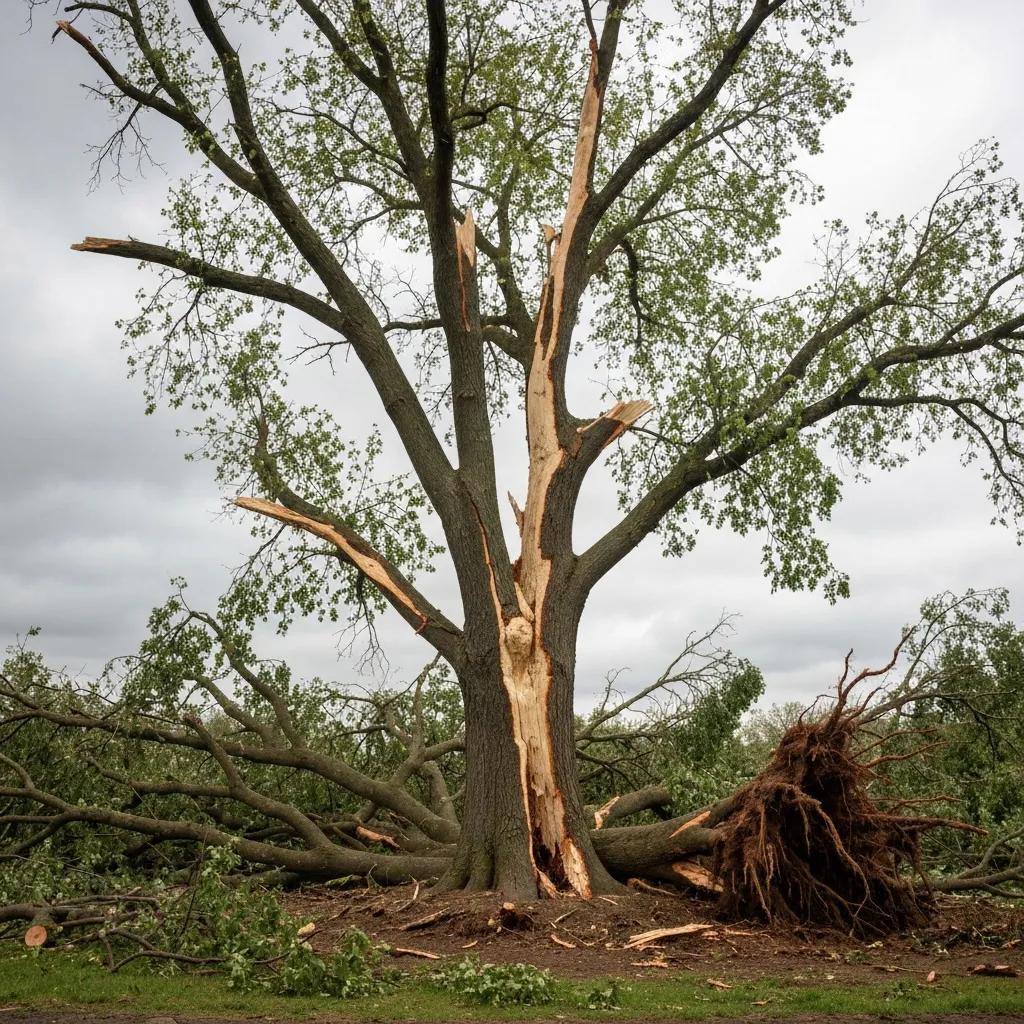
Storms create immediate hazards by combining high winds, saturated soils, ice loads, and lightning, which together can undermine a tree’s stability. Wind can shear roots or cause windthrow (uprooting), saturated ground weakens anchorage and lets trees lean or fall, ice and snow add weight that breaks limbs, and lightning can split trunks or start decay that weakens structure over time. After severe weather, treat trees with major limb loss, new leaning, or cracked cambium as potential emergencies and don’t approach them until they’ve been assessed. A prompt professional inspection will decide whether temporary bracing, partial removal, or full emergency extraction is the safest course and help prevent secondary damage to roofs or utilities.
How Jason Pence Tree Service Handles 24/7 Emergency Removal in Fort Wayne
When we respond to an emergency, we focus on quick triage, clear safety controls, and staged removal to eliminate immediate risks while protecting property and neighbors. Our process starts with a phone triage to confirm location, severity, and whether structures or utilities are involved, then we dispatch certified crews with the right gear for a fast on‑site assessment. Safety steps include establishing exclusion zones, coordinating with utilities as needed, and using rigging or staged lowers to remove sections without added damage. This systematic, safety‑first approach removes hazards quickly and documents the work for homeowners and insurers.
The table below summarizes typical response elements so you know who does what and how fast the team moves.
This framework shows how defined roles and the right equipment reduce risk and speed safe removal. Fort Wayne homeowners can expect a certified arborist to lead assessments and keep communication clear at every phase.
What Is the Step‑by‑Step Emergency Tree Removal Process?
Emergency removal follows a familiar sequence: initial call and triage, on‑site safety assessment, removal planning with permit or utility coordination if needed, controlled dismantling, then cleanup and documentation. During triage, give your location, visible damage, whether people or structures are affected, and any utility involvement—this helps prioritize response and equipment. On site, the certified arborist checks root and trunk stability, picks rigging points, and decides if aerial lifts, cranes, or bucket trucks are required, then sets exclusion zones. Controlled dismantling sections the tree and lowers pieces to avoid secondary damage; crews then chip, grind, and haul debris while documenting the work for insurance claims. For example, when a large oak split onto a roof, crews stabilized loose sections, coordinated with utilities, and used a crane to lower heavy pieces to protect the structure.
What Specialized Equipment and Safety Measures Do We Use?
Emergency removals often need aerial lifts, bucket trucks, cranes, rigging gear, chainsaws with specialty bars, and stump grinders to fully remove hazards and restore safe conditions. Aerial lifts and bucket trucks let crews work safely over structures; cranes are used when large trunks or whole trees must be removed where sectional lowering isn’t possible. Rigging hardware—3‑part pulley systems and rated slings—controls load descent to protect nearby assets. Safety standards include PPE (helmets, eye/ear protection, chaps), traffic and pedestrian control, clear exclusion zones, and working with utility providers to de‑energize lines when necessary. These tools and protocols cut incident risk and help crews finish emergency work efficiently while protecting people and property.
Typical Costs and Insurance Coverage for Emergency Tree Removal
Costs for emergency tree removal vary because pricing reflects tree size, site access, damage extent, equipment needed, and response timing—after‑hours or 24/7 calls often include emergency fees. Costs jump when cranes, specialized rigging, or utility coordination are required, and when trees are entangled with structures or vehicles that need careful sectioning. Insurance often covers removal when storm damage causes the hazard, but it depends on your policy. Document damage quickly, keep receipts, and follow your insurer’s guidance for adjuster inspections. The comparison below helps homeowners understand common job types, the main cost drivers, and how likely insurance is to cover the work.
How to read this comparison: scenarios show typical costs and insurance likelihood so you can set expectations.
Accessibility and damage type strongly influence both price and the chance of insurance coverage. Take photos with timestamps, keep notes, and get a contractor estimate to share with your adjuster.
What Drives Emergency Tree Removal Costs?
Main cost drivers include tree height and trunk diameter, proximity to structures or utilities, site accessibility for trucks and cranes, the degree of internal decay or fragmentation, and whether the call is after hours. Bigger trees need more labor and heavier equipment; tight urban yards require specialized rigging and hand‑lowering; trees on roofs or lines require structural protection and staged removal. Add‑on services like stump grinding, chipping, and haul‑away increase the final bill. Below are common cost factors to help you plan and discuss options with crews.
Common cost factors:
- Tree size and species — bigger and denser trees take more time and equipment.
- Site access for trucks, cranes, and debris removal equipment.
- Extent of storm or structural damage that requires protection measures.
- Need for utility coordination or municipal permits, which lengthen the job.
How to Work with Insurance After Storm‑Damage
Start by documenting damage thoroughly—timestamped photos and videos, notes about when the storm hit, and what you observed—then file a claim quickly and keep all receipts for emergency work. Tell your insurer whether the tree caused structural damage versus just falling in the yard (many policies only cover damage to insured structures). If possible, get a professional estimate that explains the hazard, recommended actions, and itemized costs; that helps adjusters evaluate liability and scope. Jason Pence Tree Service offers free estimates and can help document work for claims—call our number to request guidance. Clear documentation speeds claims and increases the chance your emergency work will be covered when your policy allows.
Homeowner checklist for insurance interactions:
- Photograph damage immediately and include surrounding context (structures, roads).
- File the claim and keep the claim number handy.
- Get a written estimate from a qualified tree service and keep all receipts.
- Ask your insurer whether an adjuster will visit before or after emergency mitigation.
Following these steps preserves evidence, clarifies coverage, and positions you to recover costs when your policy applies.
How to Spot Hazardous Trees Before They Become Emergencies
Finding hazardous trees early reduces the need for emergency removal by letting you schedule safer, less expensive work. Warning signs include fungal fruiting bodies (conks), trunk cracks, exposed or rotten roots, progressive crown dieback, sudden leaning, and loose or missing bark—each points to internal decay, root rot, or mechanical damage. Do routine visual checks after storms and schedule periodic arborist inspections to catch problems early. The table below links common symptoms to likely causes, risk levels, and recommended homeowner actions so you can tell maintenance issues apart from emergencies.
Use this table to turn visible symptoms into action priorities and risk assessments.
Early detection using this symptom guide helps homeowners arrange proactive care and avoid emergency situations when possible.
Common Signs a Tree Is Dangerous or Dying
Look for large dead limbs, severe crown thinning, mushrooms or conks on the trunk or roots, trunk cracks or splits, and hollows or rot that weaken structure. Fruiting bodies mean decay organisms are inside the wood, dead limbs raise the chance of falling branches, and trunk splits show compromised load paths that may fail under stress. Do simple walk‑around checks weekly or seasonally, and pay special attention after storms, heavy rain, or drought. If multiple signs appear or decline speeds up, schedule a certified arborist visit to decide whether pruning, mitigation, or removal is the safest choice.
When to Call a Professional Arborist
Call a certified arborist when trees are close enough to hit structures, when you see structural defects (cracks, root heave, conks), after a storm that changed a tree’s condition, or when a tree’s health drops quickly without an obvious cause. Certified arborists assess root stability, internal decay, disease presence, and overall structural integrity using visual checks and, when needed, tools like sounding or resistograph testing to find hidden decay. Early professional evaluation often lets you reduce hazards with pruning, cabling, or selective removal before an emergency happens. Schedule regular assessments every few years or after big storms to integrate preventive care into your property plan and lower the chance of sudden, costly emergencies.
Preventative Tree Care to Reduce Emergency Risk

Preventative care keeps trees structurally balanced, manages disease, and protects root zones so trees are better able to withstand storms and stress. Core practices include regular pruning to remove deadwood and balance weight, periodic health checks by certified arborists, proper watering and mulching to support roots, and planting species suited to local soil and wind conditions. These measures reduce wind sail, remove decay‑prone limbs, and strengthen root systems. A planned maintenance schedule spreads costs and prevents sudden emergency removals that are more expensive and riskier.
Practical preventative actions homeowners can take:
- Schedule pruning every 3–5 years for mature trees, or follow your arborist’s recommendation.
- Protect root zones with mulch, avoid soil compaction, and don’t trench near roots when possible.
- Remove dead or diseased branches promptly to prevent progressive decay and sudden failures.
- Plant species suitable for your site and keep large trees a safe distance from structures and utilities.
How Regular Trimming and Pruning Cut Tree Hazards
Routine trimming and pruning correct structural defects, reduce crown weight, and remove deadwood—actions that lower the chance of branch or trunk failure during storms. Proper pruning balances lateral branches, cuts wind sail, and removes weak unions that tend to split. Timing and technique matter: pruning in dormant seasons often reduces stress, and early structural pruning guides healthy form without removing excessive live tissue. Hire qualified crews to ensure cuts meet industry standards and avoid creating decay entry points that cause long‑term problems.
Long‑Term Tree Health Strategies for Homeowners
Long‑term care focuses on protecting the root zone, choosing and siting new trees correctly, ongoing pest and disease monitoring, and regular certified arborist checks to catch decline early. Soil amendments, targeted irrigation during drought, and deep‑root fertilization when appropriate support root health and anchorage. If a tree has chronic structural or health issues, compare long‑term care costs against removal and replacement to decide the most sustainable option. A proactive maintenance plan combined with periodic professional assessments extends tree life while lowering emergency risk and protecting property value.
Why Choose Jason Pence Tree Service for Emergency Removal in Northeast Indiana?
Jason Pence Tree Service, Corp is a local emergency provider combining certified arborist assessments, specialized equipment, and 24/7 availability to respond to urgent tree hazards in Fort Wayne and nearby communities. We prioritize rapid deployment, fully licensed and insured operations, and environmentally conscious cleanup—like grinding stumps into mulch for reuse. Homeowners get clear, documented estimates and a safety‑first approach that coordinates with utilities and insurers when storm damage affects structures or lines.
Why homeowners trust us for emergency tree work:
- 24/7 emergency response for urgent situations.
- Specialized equipment, including aerial lifts and cranes for complex removals.
- Licensed, insured crews with certified arborist assessments and written estimates.
- Environmentally conscious practices, such as grinding stumps into usable mulch.
Our Experience and Certifications
Founded by Jason Pence and led by local crews, we have experience in emergency and storm‑damage cleanup, heavy equipment operations, and certified‑arborist oversight to keep work safe and code‑compliant. While specific staff certifications aren’t listed here, homeowners should expect qualified assessments and safe removal methods. Our certified arborists evaluate structural integrity and recommend mitigation, while trained crews carry out complex removals using industry‑standard rigging and safety protocols to minimize secondary damage to structures and landscapes.
How Our Customer‑Focused, Eco‑Friendly Practices Help You
We focus on clear benefits: free estimates to reduce uncertainty, transparent pricing to aid claims, and thorough cleanup to restore your property quickly. Environmentally friendly measures—like converting removed wood to mulch—turn waste into a landscape asset and cut landfill waste. Together, these practices speed recovery, simplify insurer interactions, and minimize long‑term landscape disruption after an emergency.
End of article.
Frequently Asked Questions
What should I do if I suspect a tree is hazardous?
If you think a tree is dangerous, do a quick visual check from a safe distance for cracks, leaning, or decay—then stay away. If you see worrying signs, call a certified arborist for a professional assessment. They’ll recommend whether monitoring, pruning, or removal is best. Early action helps prevent emergencies and keeps your family and property safe.
How can I prepare for potential tree emergencies?
Preparation starts with regular inspections and basic maintenance. Learn common hazard signs—dead branches, fungal growth, or strong leaning—and keep access clear for emergency crews. Save contact info for local tree services and know your insurance basics for storm damage. Having a plan and trusted pros on speed dial helps you act fast when an emergency occurs.
What are the risks of attempting DIY tree removal?
DIY removal can be dangerous. Without proper training and equipment, you may misjudge a tree’s stability or fall direction, causing injury or property damage. Heavy tools like chainsaws and rigging require experience. For safety and liability reasons, leave complex or emergency removals to licensed professionals who follow strict safety protocols.
How can I tell if a tree is worth saving or should be removed?
Deciding whether to save or remove a tree depends on its health and structure. Extensive decay, major leaning, or large cracks often mean removal is safest. If damage is minor and the tree is otherwise healthy, pruning or treatment may preserve it. A certified arborist can assess recovery potential and recommend the right path for safety and long‑term value.
What are the environmental impacts of tree removal?
Removing a tree affects wildlife habitat, soil stability, and local microclimates. Trees sequester carbon, improve air quality, and manage water. To reduce impacts, consider replanting native species and follow best practices for disposal—like turning wood into mulch. Working with local arborists helps ensure responsible, ecosystem‑aware tree management.
What should I expect during an emergency tree removal?
Expect a safety‑first, methodical approach. Crews will assess the scene, set exclusion zones, and coordinate with utilities if needed. They’ll remove the hazard using specialized equipment to limit further damage, then clean up and document the job for insurance. Clear communication from the crew will keep you informed throughout the process.
How can I keep my trees healthy and reduce emergency risk?
Keep a regular maintenance schedule: pruning, periodic health checks, and proper watering. Watch for disease or structural issues and consult a certified arborist for evaluations. Plant species suited to your site and place new trees away from structures. Proactive care extends tree life and lowers the chance of costly emergencies.

Leave a Reply