
Emergency Tree Removal in Fort Wayne Explained

Emergency Tree Removal in Fort Wayne Explained
Emergency Tree Removal in Fort Wayne — Fast, Safe, Local Tree Services You Can Trust
When a tree or large limb becomes a clear danger to people, property, utilities, or access, emergency tree removal is the quick, safety-first response that assesses the risk and removes the hazard. This guide explains what counts as an emergency in Fort Wayne, how emergency crews prioritize and remove threats, the main cost drivers, and practical steps homeowners can take to lower future risk through preventative care. You’ll find simple cues for spotting hazardous trees, a step-by-step storm-response workflow, and the documentation insurers typically need to speed up repairs. We also cover when to call a professional emergency arborist and which local providers cover Fort Wayne and nearby Northeast Indiana communities. Read on for clear checklists, cost and process summaries, and contact steps to follow when time matters most.
What Is Emergency Tree Removal and When Do You Need It in Fort Wayne?
Emergency tree removal is an urgent service focused on safety: crews quickly evaluate and remove trees or large limbs that present an immediate risk. A removal becomes an “emergency” when the tree shows signs of imminent structural failure—examples include a split trunk, an uprooted root plate, or large limbs hanging over people or buildings. Acting quickly reduces property damage, limits liability, and restores safe access. Emergency jobs often require specialized equipment and experienced crews. Knowing the common emergency scenarios and how to respond helps Fort Wayne residents protect people and speed insurance recovery after storms.
What Situations Qualify as a Tree Emergency?
Tree emergencies are situations where waiting makes injury, structural damage, or utility outages more likely. Typical emergency scenarios in Fort Wayne include trees that have fallen onto houses or vehicles, large limbs suspended above occupied areas, trees that have contacted power lines, and trees that have clearly split or been uprooted. If you encounter any of these, keep a safe distance, evacuate the immediate area if needed, and don’t try to move heavy debris yourself—the wood can hold dangerous tension. Call emergency services if life is at risk, and when it’s safe, photograph the scene for insurance documentation.
Jason Pence Tree Service, Inc. is a local provider that handles tree removal, stump grinding, and trimming across Fort Wayne, Leo, Grabill, Auburn, and surrounding Northeast Indiana neighborhoods.
The paragraph above leads into the provider overview below. Next we explain why a specialized emergency service matters and what capabilities to expect from a responder.
How to Identify Hazardous Trees Requiring Immediate Removal?

Spotting hazardous trees is about watching for visible and tactile signs that predict collapse. Key warning signs include large vertical or horizontal cracks in the trunk, major limb splits, fungal conks at the base that indicate internal decay, a lifted or heaving root plate after heavy rain, or a sudden increase in lean after strong winds. Also look for canopy instability—large limbs hanging by a few fibers or broken tops that could fall—and for trees touching power lines, which carry both electrocution and fall risk. If you see multiple signs or the tree sits near occupied structures, treat it as an emergency and call a professional crew.
Because tree failures can be complex and dangerous, a careful evaluation by trained personnel is often necessary to decide the safest course of action.
Hazard Tree Evaluation and Management for Public Safety
Where trees and people share space, the risk of injury or property damage from tree failure is a public concern. When the likelihood of significant damage is high and failure seems likely soon, immediate and decisive action may be required to reduce risk. If the chance of failure is low and the likely damage minimal, urgent removal may not be necessary. Deciding the right response in these situations can be complex and requires careful judgment.
Why Choose Jason Pence Tree Service for Emergency Tree Removal in Fort Wayne?
Emergency removal requires quick triage, strict safety practices, and heavy-duty equipment. The right contractor combines fast availability with technical skill to protect people and property. Jason Pence Tree Service, Inc. offers around-the-clock emergency response in the area, brings specialized gear like aerial lifts and cranes when needed, provides free estimates, and helps coordinate insurance documentation to streamline claims. Their local presence and equipment mix shorten onsite time and reduce secondary damage by using controlled, staged removals. The table below summarizes core service features and client benefits to help you compare emergency providers quickly.
This quick table highlights the elements that matter in emergencies and how each reduces risk and stress during a crisis. Next we’ll cover the advantage of 24/7 availability and the crew skills that make complex removals safe and efficient.
How Does 24/7 Availability Benefit Fort Wayne Homeowners and Businesses?
Round-the-clock availability shortens the time between spotting a hazard and getting it secured, which lowers the chance of collapse and additional damage to homes, vehicles, and utilities. Fort Wayne often sees storms and wind events that create dangerous conditions at night or during off-hours—having a provider who can triage, stabilize, and schedule removal immediately prevents situations from getting worse. Fast response also reduces exposure for residents and first responders by clearing access routes and stabilizing trees until full removal is possible.
What Professional Equipment and Experience Ensure Safe Tree Removal?
Professional emergency teams use mechanical advantage, skilled rigging, and effective debris-management systems to work safely in tight or hazardous spots. Tools like aerial lifts, cranes, and industrial chippers let crews lower large pieces in controlled sections and process debris on-site. Experience with rigging, directional cuts near structures, and working beside utilities reduces mistakes that cause secondary damage. When those skills and tools are combined with clear safety plans, jobs finish faster and with lower risk to people and property.
What Is the Step-by-Step Process for Emergency Tree Removal in Fort Wayne?
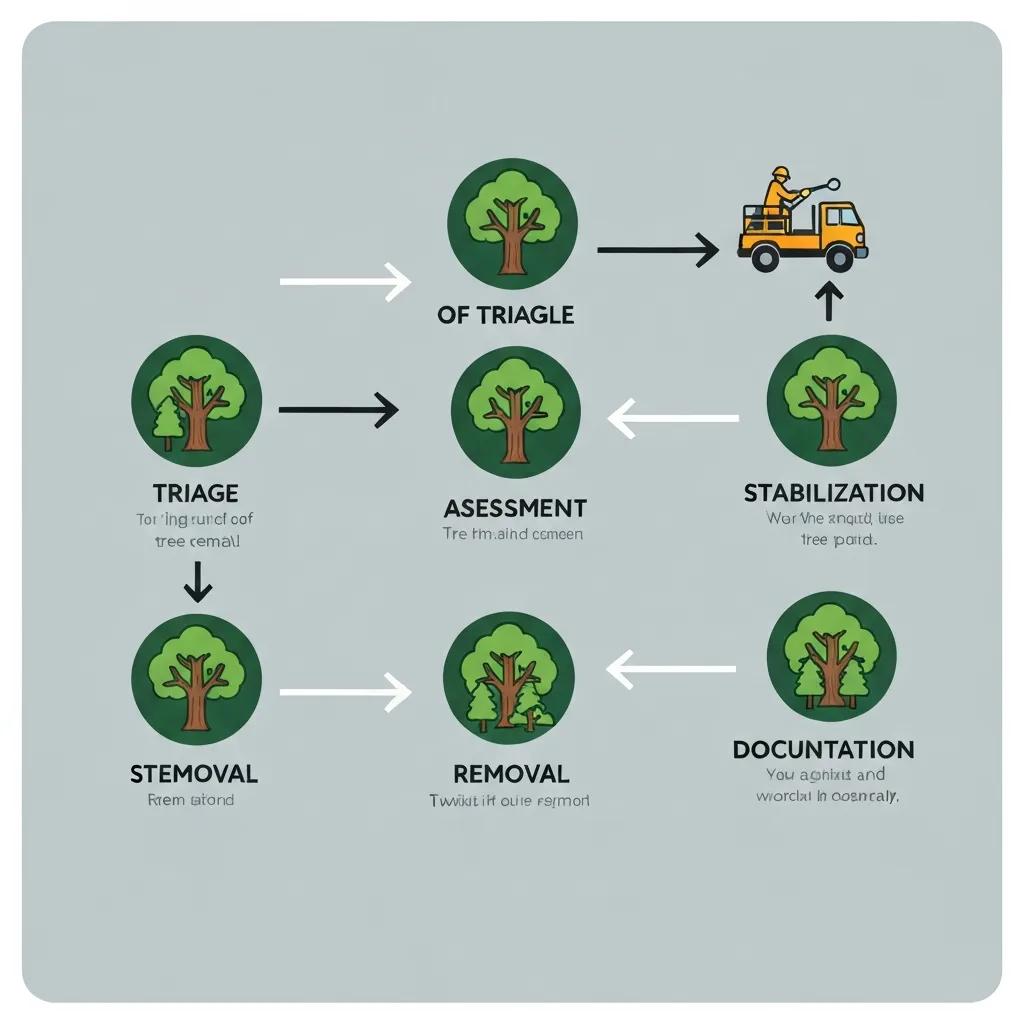
A dependable emergency workflow follows a predictable sequence: immediate triage, on-site assessment and estimate, hazard stabilization, controlled removal, and final cleanup with documentation. This sequence keeps safety central and creates the records homeowners need for insurance and future planning. The numbered list below gives a quick view of the usual emergency response flow, followed by a table that outlines expected actions and outcomes for each phase.
- Immediate triage and safety guidance to the caller, including evacuation instructions if needed.
- On-site assessment and free estimate to define the hazard, access needs, and equipment required.
- Short-term stabilization of the tree or site to prevent further collapse while preparing removal.
- Controlled removal using rigging, aerial lifts, or cranes as needed, followed by chipping and hauling debris.
- Final inspection, stump options, and documentation to support insurance and restoration work.
This checklist gives a rapid-action view of the workflow; the table below breaks the same steps into phases with likely timelines and outcomes so homeowners know what to expect.
This process table explains what to expect at each stage and the documentation that supports safety and insurance claims. The next sections describe the initial assessment and what happens during safe removal and cleanup.
How Does the Initial Assessment and Free Estimate Work?
The initial assessment checks tree condition, site hazards, access limits, and proximity to structures or utilities to decide the removal strategy and equipment needed. Crews inspect trunk integrity, root stability, wounds or decay, overhead hazards, and possible rigging anchor points while noting access for cranes or lifts. The free estimate breaks out labor, required machinery, disposal, and optional stump services so homeowners understand cost drivers and timelines. Solid documentation from the start—photos, measurements, and a written scope—also supports insurance claims and helps avoid delays when approving and mobilizing the crew.
This mini-table shows what the assessment produces and why that documentation matters. Next we describe the removal techniques and cleanup practices that protect property during execution.
What Happens During Safe Tree Removal and Storm Damage Cleanup?
After assessment, crews follow a staged removal approach that reduces loads and protects nearby structures: they rig and lower large sections, use aerial lifts for precise cuts, and deploy chippers and trucks to process debris efficiently. Throughout the work, the team enforces exclusion zones and keeps clear communication to protect bystanders. Once major pieces are down, crews chip branches, haul away logs, and can grind stumps if requested to prepare the site for replanting or landscaping. Final steps include sweeping access areas, documenting the cleared property, and giving customers an itemized invoice with photos for insurance.
How Much Does Emergency Tree Removal Cost in Fort Wayne?
Costs for emergency removal depend on several factors: tree size and species, proximity to structures or powerlines, necessary equipment, crew size, time of day, and debris disposal. Understanding these drivers helps homeowners set realistic expectations and plan for insurance coverage. Jobs can range from simple single-limb removals to complex crane operations when trees are entangled with buildings or utilities. The table below outlines common cost drivers, what affects price, and their typical impact so you can prioritize budget planning.
This table clarifies how each factor typically affects cost and helps you compare estimates. Below we explain the main cost components in plain terms and how the company supports insurance claims.
What Factors Influence Emergency Tree Removal Pricing?
The final price depends on several linked variables. Tree size and species matter—denser wood and larger diameters mean more labor and heavier equipment. Proximity to structures and powerlines raises complexity: tight work zones need precise rigging or cranes and slower, safer methods. Limited access (narrow streets, overhead obstructions) increases labor time and may require extra staging. Urgency—calls during nights or right after a storm—can add staffing and mobilization fees, and debris volume or stump grinding options affect disposal costs. Knowing these drivers helps you evaluate estimates and anticipate insurance coverage.
How Does Jason Pence Tree Service Assist with Insurance Claims?
Jason Pence Tree Service, Inc. helps with insurance claims by documenting damage with photos, supplying detailed itemized estimates and invoices, and assembling the evidence insurers typically request. The company’s free on-site estimates and clear documentation create a solid record of damage, the recommended scope of work, and costs to submit with a claim. This approach reduces back-and-forth with insurers and helps verify cause and urgency when evaluating storm-related losses. Prompt, complete documentation can shorten claim processing and get properties back to normal faster after an emergency removal.
How Can Preventative Tree Care Help Avoid Emergency Tree Removal in Fort Wayne?
Preventative care lowers how often emergencies happen and how severe they are by correcting structural problems before storms hit and by keeping trees healthy so they resist windthrow and failure. Regular pruning to remove hazardous limbs, targeted crown reduction to reduce wind resistance, root and soil inspections to spot early decline, and scheduled health checks by an arborist all reduce emergency risk. The list below summarizes practical maintenance steps homeowners and property managers can take to prevent future emergencies.
- Schedule routine inspections: Annual or post-storm checks to catch decay, root issues, or structural cracks.
- Prune for structure: Remove weak attachments and reduce crowns to improve wind resistance.
- Address root health: Avoid grade changes, soil compaction, and root injuries that destabilize trees.
- Plan targeted removals: Remove high-risk trees proactively before they fail.
These preventive steps reduce emergency frequency and often lower long-term maintenance costs. The following section explains pruning practices and scheduling guidance in more detail.
What Tree Maintenance Practices Reduce Storm Damage Risks?
Good maintenance focuses on structural pruning, removing hazardous limbs, and keeping trees vigorous so they withstand storms. Structural pruning corrects co-dominant stems and weak attachments to redirect growth and reduce leverage on the trunk, while selective crown reduction lowers wind load on tall trees. Avoid over-pruning and use proper cuts to preserve tree health. Removing decayed or compromised trees before storms eliminates high-risk hazards. Regular mulching, protecting roots from compaction, and soil aeration all support strong roots—important for resisting saturated soils and high winds.
When Should You Schedule Regular Tree Inspections with an Arborist?
Inspection frequency should match the property’s risk. Most residential properties benefit from annual check-ups. High-risk sites or mature trees near structures are best inspected every six months, and trees should be checked promptly after severe weather. Call an arborist after heavy winds, lightning strikes, or ice storms to catch early signs of failure. Inspections produce actionable recommendations—pruning, cabling, or removal—and create documentation that helps plan maintenance budgets and supports insurance readiness. Regular inspections turn prevention into lower emergency needs.
Which Areas Does Jason Pence Tree Service Cover for Emergency Tree Removal in Fort Wayne and Northeast Indiana?
Jason Pence Tree Service, Inc. serves Fort Wayne and nearby Northeast Indiana communities with emergency and storm-damage response across a local footprint designed for rapid mobilization. Primary service areas include Fort Wayne, Leo, Grabill, and Auburn, with work in adjacent neighborhoods when crew availability allows. The company provides 24/7 emergency response, free estimates, and insurance coordination to help property owners recover quickly after storms. Below is a short list of the main areas served and what residents can expect when they call for emergency help.
- Fort Wayne and city neighborhoods: rapid triage and scheduled removal according to priority.
- Leo and nearby townships: local crews stage for faster response in rural-residential zones.
- Grabill and Auburn: coverage includes storm cleanup and hazardous-tree mitigation.
- Outlying Northeast Indiana communities: service available with variable response times depending on distance.
This regional list clarifies coverage expectations and helps homeowners know whether local crews can reach them quickly. The final section explains how to contact the company and what information to have ready when you call.
What Neighborhoods and Communities Receive 24/7 Emergency Tree Services?
Service focuses on Fort Wayne and nearby towns where crews keep local staging to reduce travel time and prioritize life-safety incidents. Neighborhoods across Fort Wayne, along with Leo, Grabill, and Auburn, receive prioritized emergency service and storm cleanup; more distant communities are scheduled based on crew availability and the scope of storm events. If you live in higher-risk areas—near powerlines, on steep lots, or next to critical infrastructure—advanced coordination is recommended so crews can stage the right equipment and arrive faster. Knowing local coverage helps set realistic arrival windows and site-prep expectations.
How to Contact Jason Pence Tree Service for Immediate Emergency Assistance?
When you call for emergency help, give clear location details, describe the hazard, note any contact with power lines or structures, and tell the dispatcher if anyone is injured or trapped so they can prioritize response. Jason Pence Tree Service, Inc. can be reached at (260) 627-2332 and has a local office at 14435 Leo Rd, Leo, IN 46765. Have your address, a short description of the tree condition, and photos ready if it’s safe to take them. That information speeds triage, lets the dispatcher recommend immediate safety steps, and helps the crew arrive with the right equipment. After the call, expect a documented estimate and guidance on the paperwork insurers often require.
This guide covered how to spot emergency scenarios, choose a capable responder, understand the emergency workflow and cost drivers, take preventative actions, and contact local emergency crews in Fort Wayne and Northeast Indiana. Use the checklists, tables, and steps here to make informed, fast decisions when time is critical.
Frequently Asked Questions
What should I do immediately after a tree falls on my property?
Put safety first. Move everyone away from the fallen tree and any area that looks unstable. If the tree is touching power lines or someone is injured, call emergency services right away. Don’t try to move large pieces yourself—there can be hidden tension or other hazards. When it’s safe, take photos for insurance and call a professional tree removal service to assess and remove the hazard.
How can I prepare my property for potential tree emergencies?
Prepare by keeping trees maintained and inspected. Schedule annual checks with a certified arborist to catch structural issues early. Prune hazardous limbs, keep trees planted at safe distances from buildings and lines, and create an emergency plan with contact information for local tree services. Having a trusted contractor on call speeds response after storms.
What are the signs that a tree may need to be removed before it becomes an emergency?
Watch for visible cracks in the trunk, a marked lean, lots of dead branches, fungal growth at the base, or root heaving—these are red flags for failure. Trees close to homes or powerlines deserve extra attention. Regular professional inspections let you remove risky trees on your schedule instead of in an emergency.
How does weather impact the need for emergency tree removal?
Severe weather—high winds, heavy storms, or ice—greatly increases the chance of tree failure. Wind can uproot weak trees or snap large limbs, and ice adds weight that can break branches. After severe weather, inspect trees (from a safe distance) for damage and call a pro if you see signs of compromised structure.
What should I expect during the emergency tree removal process?
Expect a safety-first, step-by-step approach: the crew will assess and stabilize the scene, set exclusion zones, and then remove the tree in controlled sections using appropriate equipment. They’ll chip and haul debris and provide documentation and an itemized invoice for insurance. The team should keep you informed throughout the job.
Are there any legal considerations for tree removal on my property?
Yes—rules vary by location. In Fort Wayne, check local ordinances for protected species or trees near property lines. If a tree threatens neighboring property or public utilities, urgent action may be required. When unsure, consult local authorities or seek legal advice about permits and responsibilities before removing trees.
How can I find a reliable emergency tree removal service?
Look for local companies with strong reviews and 24/7 emergency response. Verify their insurance, licenses, and industry credentials. Ask neighbors for recommendations, and call several providers to compare responsiveness and estimates. A reputable company will explain safety procedures and provide clear documentation for insurance.

Leave a Reply